
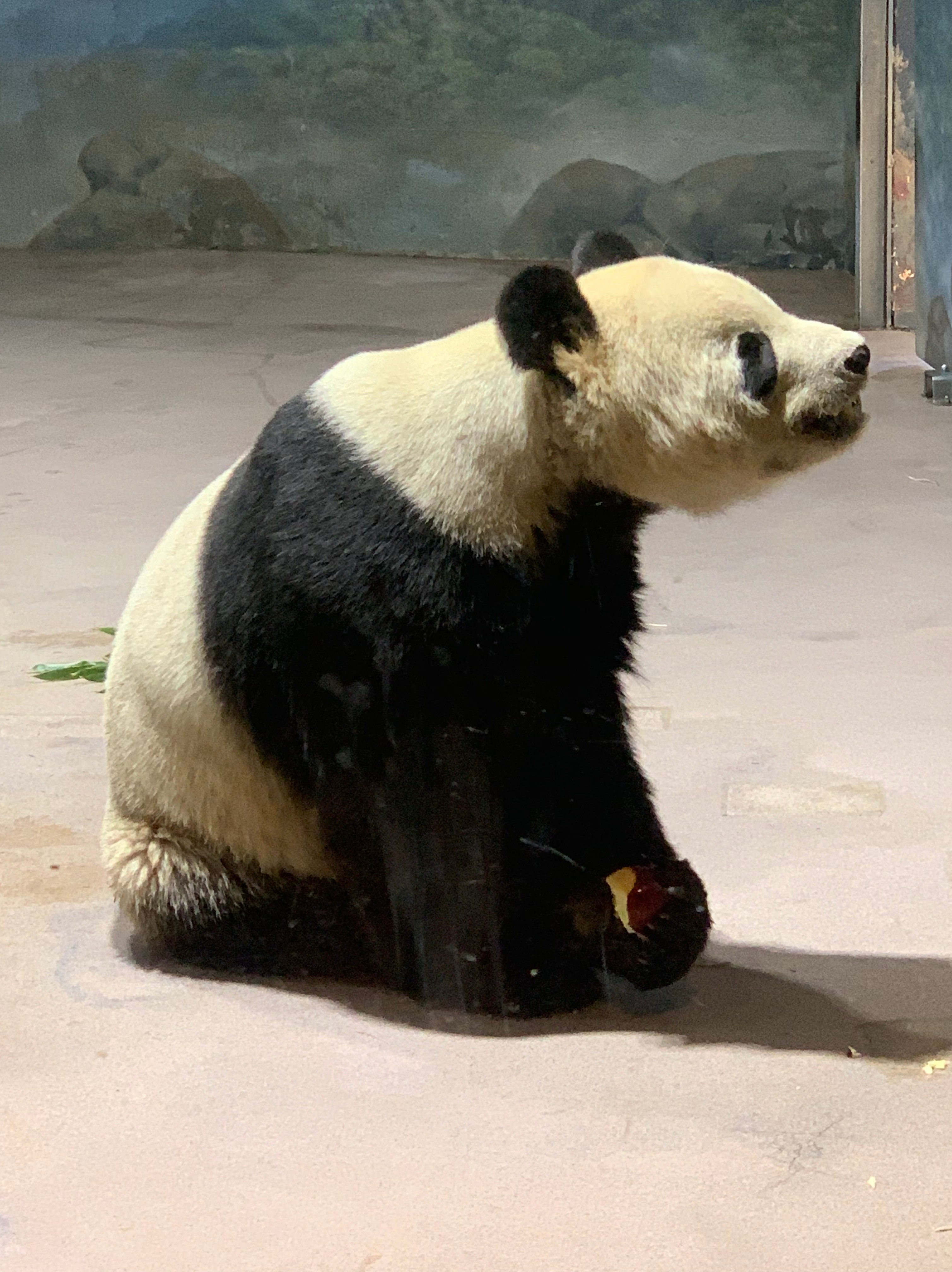
Today was the visit to the Smithsonian’s National Zoo. I was reflecting on a time when I was a child visiting our local zoo. In the 1960s there wasn’t much of a story to what you saw. Most of the animals were in simple enclosures, OK, cages, with no labeling other than what type of animal it was with a picture of it. The animals all looked miserable, and I’m sure they were. The animal exhibits today take great care to mimic their natural environments and make the animals as healthy and comfortable as possible.
Zoos have come a long way since then, and I was impressed by the stories this museum is telling the public. These stories range from animal behaviors, habitat, conservation efforts, biological facts, and interactions with other animals. Education has finally taken a front seat to zoos across the country building on triumphs and failures of the past.
Devra Wexler, from the zoo education department, was a wealth of information about how far their zoo has come. As we visited the Panda Plaza, she used it to explain that the animals are the objects and since they are living creatures they are not going to always be visible. For example, when its cold some animals are kept inside, or the animals prefer staying hidden and warm somewhere. Because of the unpredictability of animals and their behaviors they must rely on a myriad of pedagogy to ensure visitors learn something no matter if the animal is seen or is not seen. It’s not just textual, it is also interactive and multi-sensory. For example, one of my favorite parts was pressing the buttons to hear the sounds that different pandas make in the stages of their lives. A great teaching tool and fun. I watched several children play the sounds several times.
Some may look at the fact that animals (the objects) are not always going to stay stationary or behave a certain way as a detractor for visitors. I argue that sometimes it is, but other times it can be the zoos’ strength over other museum disciplines. Inanimate objects are always going to have the same shape, colors, feel, composition, or historical significance. Animals are anything but static and consistent. I argue that their behaviors and antics are precisely why visitors are attracted to them. You get a different storytelling experience at a zoo each time you go there. That’s a great strength and not a weakness. This, combined with the accompanying pedagogy methods are what make the modern zoo fascinating.
I did also get a chuckle in the panda enclosure. Check out the picture below. I took this at the panda’s enclosure area, as I was looking inside the panda monitoring room with all this incredible camera technology used by the humans. Despite all this technology there were still labels needed to remind the humans that “human food only” goes in the refrigerator and that humans need to know where the light switch is. For a second I wasn’t sure who we were really learning about in the enclosure. I suppose even human behavior needs labeling. Yes, I am snickering while I type this.
Oh yes, there were lions also, but they were a little sleepy, so we will let the sleeping lions lie in this blog. The tigers? Well, they never showed.

 Dave's Museum Journeys