A Sneaky Kind of Day

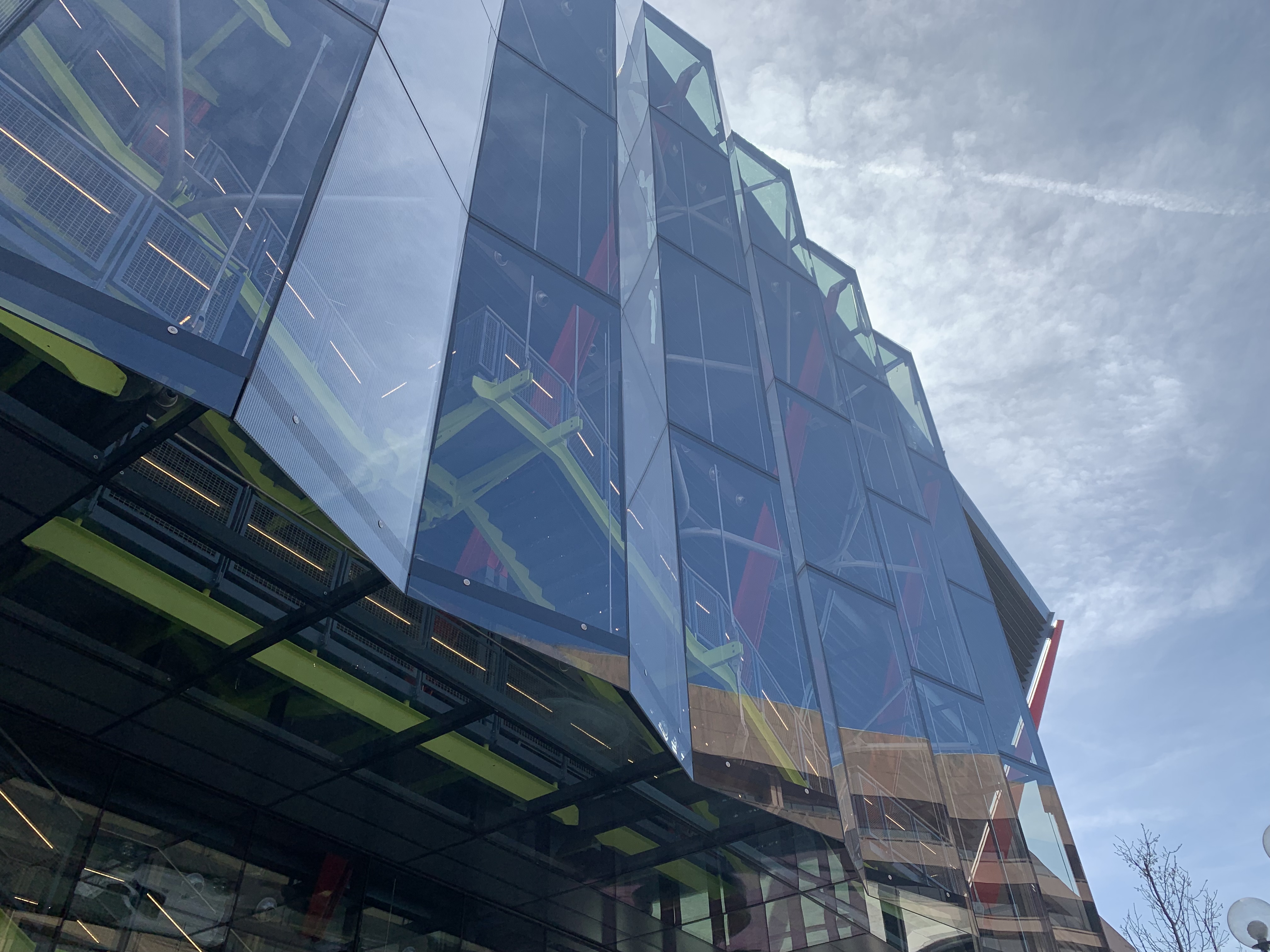
The outside of the new Spy Museum in Washington, D.C.

What a great way to wrap up our museum visits for the DC seminar with a visit to the brand new Spy Museum that we secretly got to tour. I say secretly because it is not open until May but, wow what a model modern museum it is! As a matter of fact, I would have loved to share some photos of the inside, but it’s still top secret until it opens (pun intended). These museum people have it down when it comes to the art of storytelling.  They are really pushing the boundaries of combining education with fresh, and entertaining storytelling that gets visitors really involved.

I think the new Spy Museum is an excellent example of learning from successes and mistakes and re-inventing yourself as a museum.  The old Spy Museum was a huge success but the problems of not owning that property and renting a building that had historical significance initially limited the museum’s finances and exhibit designs. When the rent got raised, it was unsustainable, even as a profit museum.

That’s when the Spy Museum board made the decision to build its own museum on property it owned and go from a profit museum to a non-profit museum.  By creating their new museum from the ground up combined with 16 years of experience from the old museum that served as a catalyst to make it an incredibly unique experience. They have not failed if the reveal is any indication!  Many other museums are not as lucky to have this sort of re-birth, and they have to continually shoe-horn their stories into antiquated spaces, tight budgets, lack of resources, or deal with all of these issues.

What I was most impressed with was the RFID experience where visitors get their own personal ID and build their experience. It is brilliant! While with their families or friends visitors can choose to get their own secret identity and go on a mission. Where that visitor goes and how they interact with the exhibits determines their personalized outcome. That builds on so many elements of an effective visitor storytelling experience. It directly involves each visitor, makes every gallery interactive and gives them a customized experience. If that weren’t enough the visitor gets to take their RFID badge home and continue the experience if they want to. That was my WOW moment. The Spy Museum is effectively bringing their museum back into the homes of visitors and continuing to give them a personalized experience. I know of no other museum that has even attempted this personalized experience from museum to home.  They also succeeded in using low tech RFID technology that has been around but making the museum look very high tech in the RFID applications. Sometimes a museum experience is a little ‘smoke and mirrors,’ but that adds to the fun and entertainment value.  This is a great example.

I am so happy with this museum. Despite the intense pressure to open in just a few months, their staff was gracious and humorous. I think that is also a valuable learning point. Our seminar class is also under our own intense deadlines for our group projects, but it pays to keep a level head and still laugh.

Since this is my last blog for the JHU DC Seminar I would like to thank my fellow classmates, JHU staff and the museums I visited for sharing so much of themselves and making me a better museum professional. It is an incredible group, and this experience will stick with me long after our goodbyes. I hope to keep in touch with all of you and wish you all the best of luck with your museum careers. We really did drink deeply of this city, didn’t we? Finally, I plan to keep this blog going and talk about things from time to time. I welcome your feedback!
Lions, No Tigers, and Bears…Oh Yes!

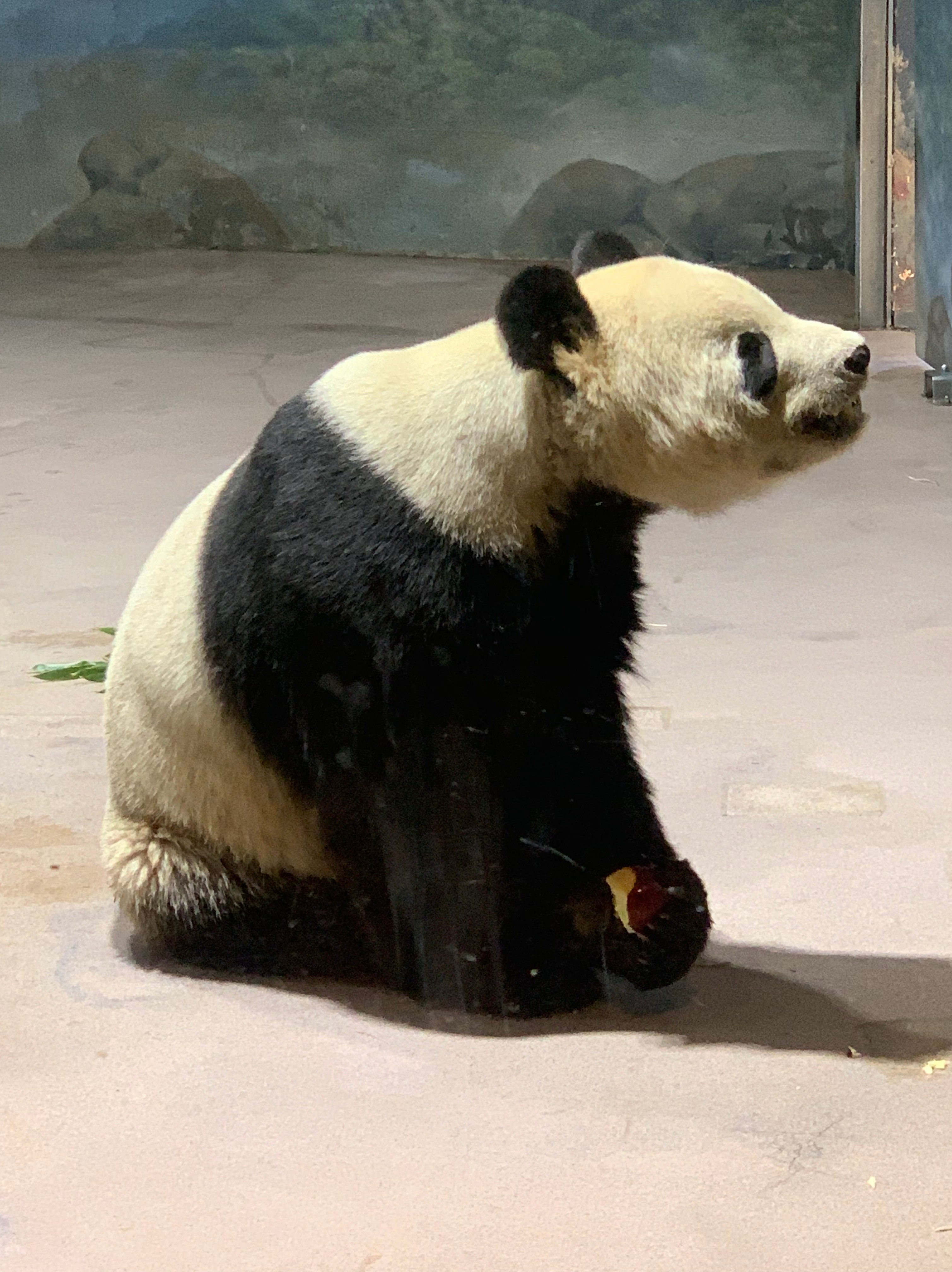
Panda bear at the Smithsonian National Museum

Today was the visit to the Smithsonian’s National Zoo.  I was reflecting on a time when I was a child visiting our local zoo. In the 1960s there wasn’t much of a story to what you saw. Most of the animals were in simple enclosures, OK, cages, with no labeling other than what type of animal it was with a picture of it. The animals all looked miserable, and I’m sure they were.  The animal exhibits today take great care to mimic their natural environments and make the animals as healthy and comfortable as possible.

Zoos have come a long way since then, and I was impressed by the stories this museum is telling the public. These stories range from animal behaviors, habitat, conservation efforts, biological facts, and interactions with other animals.  Education has finally taken a front seat to zoos across the country building on triumphs and failures of the past.

Devra Wexler, from the zoo education department, was a wealth of information about how far their zoo has come. As we visited the Panda Plaza, she used it to explain that the animals are the objects and since they are living creatures they are not going to always be visible. For example, when its cold some animals are kept inside, or the animals prefer staying hidden and warm somewhere. Because of the unpredictability of animals and their behaviors they must rely on a myriad of pedagogy to ensure visitors learn something no matter if the animal is seen or is not seen. It’s not just textual, it is also interactive and multi-sensory. For example, one of my favorite parts was pressing the buttons to hear the sounds that different pandas make in the stages of their lives. A great teaching tool and fun. I watched several children play the sounds several times.

Some may look at the fact that animals (the objects) are not always going to stay stationary or behave a certain way as a detractor for visitors. I argue that sometimes it is, but other times it can be the zoos’ strength over other museum disciplines. Inanimate objects are always going to have the same shape, colors, feel, composition, or historical significance. Animals are anything but static and consistent. I argue that their behaviors and antics are precisely why visitors are attracted to them. You get a different storytelling experience at a zoo each time you go there.  That’s a great strength and not a weakness. This, combined with the accompanying pedagogy methods are what make the modern zoo fascinating.

I did also get a chuckle in the panda enclosure. Check out the picture below. I took this at the panda’s enclosure area, as I was looking inside the panda monitoring room with all this incredible camera technology used by the humans. Despite all this technology there were still labels needed to remind the humans that “human food only” goes in the refrigerator and that humans need to know where the light switch is. For a second I wasn’t sure who we were really learning about in the enclosure. I suppose even human behavior needs labeling. Yes, I am snickering while I type this.

Oh yes, there were lions also, but they were a little sleepy, so we will let the sleeping lions lie in this blog. The tigers? Well, they never showed.

Labeling for the humans inside the Panda Plaza monitoring room.

A Powerful Pedagogy and the Quotes of the Day

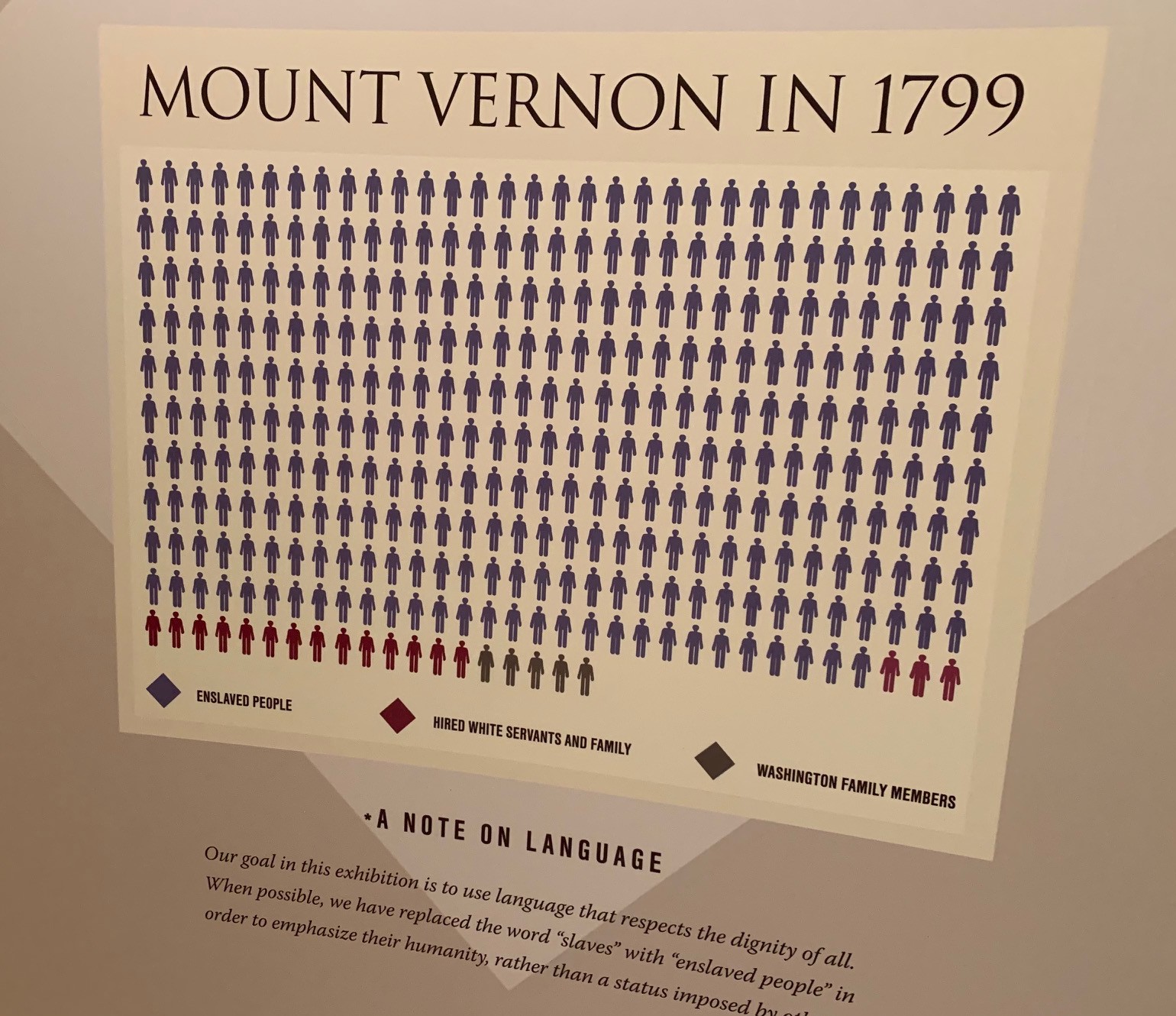
Wall panel from the Mount Vernon Museum

Today was a full day at Mount Vernon. An excellent program for us as we had a tour of the Lives Bound Together gallery that encapsulated the stories of enslaved persons that were at Mount Vernon in 1799.  Of all the artifacts and pedagogy this one panel depicted above said so much. It graphically shows the ratio of enslaved people in comparison to hired white servants and the Washington family.  They easily could have buried this completely lopsided ratio in some statistical text. However, seeing it displayed visually this way drives the point home that there is no way the Washington plantations (farms) could have functioned without enslaved servants. This visual pedagogy is jarring and shocking. I looked at it another way when Jason Burrows, Mount Vernon research archeologist said: “Think of this place like a large black neighborhood.” I have been to Mount Vernon many times, but when he said this one quote, it flipped that place on its head for me.  If I were giving the tour of the gallery, this would be one of the first things I would share.

We talked a long time about the delicate and complex story of Mount Vernon and its enslaved persons. Even the term enslaved has been changed in the narrative from slaves to give a sense of humanity back to the people that endured it. It was clear that this is the toughest subject of Mount Vernon. After all, it involves one of the founding fathers of the country, but he was also a slave owner. You cannot reconcile the two nor can you make excuses or water down the injustice. Despite this, Washington’s viewpoints changed about slavery. This shifting of thought is laid out in great detail. I think it tells a richer story that at least Washington was conflicted later in life about this horrible institution.

That leads me to what I thought the other great quote was for the day. Mason (I did not catch his last name), the Digital Producer for Mount Vernon, said: “people are trying to get simple answers about complicated questions.” So many museums can relate to this dilemma. How much can you share with visitors without overwhelming some or all of them?  If you don’t share enough information, then that simple answer becomes incomplete and misleading. The visitor then walks out thinking that the entire story is the simple story when it usually is a far deeper kaleidoscope of narratives. I talked about this in my blog yesterday when I saw the same dilemma at the National Memorial Holocaust Museum. I struggle with this all the time when I give tours, and I think this museum today will force me to look closer at my storytelling and make sure I have given visitors a clear, concise but rich experience from differing perspectives. No easy task.

The Complex Humanity Behind Stories

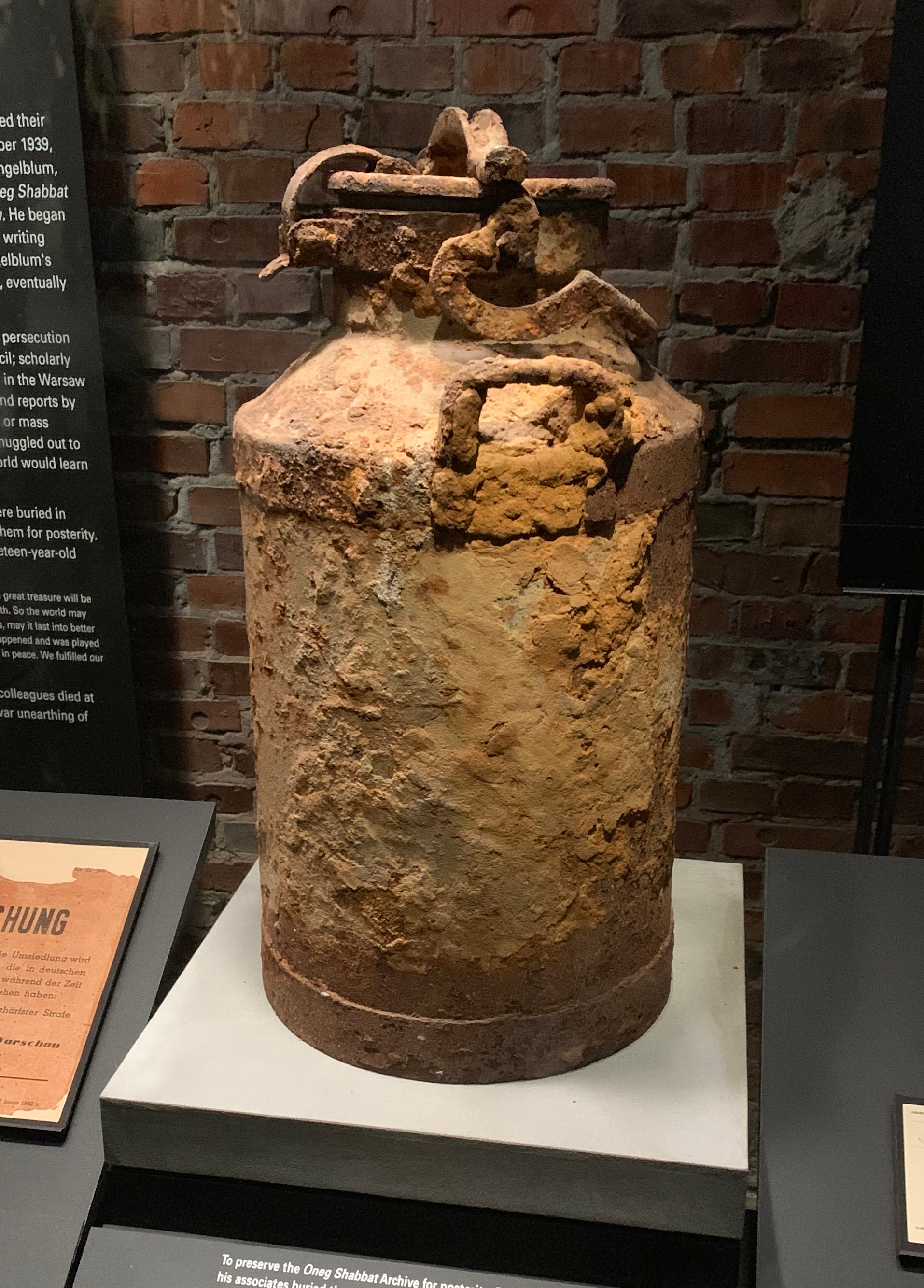
Milk jar on display from the collection of the National Holocaust Museum

We have been taught in our readings and through our seminar that universals get at the heart of why people care about a story. I am a firm believer that loss is one of the most powerful of universals. What we saw today in the United States Holocaust Memorial Museum is the most horrific and sickening slaughter of our fellow humans on record. Millions of people were systematically exterminated under one of the most oppressive ideologies of the 20th Century.

The buried milk jug (above) in the Warsaw ghetto was one of the most moving objects for me.  Perhaps knowing that they might die soon of starvation or face other cruel forms of death a Jewish historian, Emanuel Ringelblum, collected and buried important documents, art, and stories of the Jewish ghetto to be found later. Their hope was it would serve as a testimony of what happened, even if they did not survive. God how that moved me. Their deaths would not silence their stories. This jar was found in 1950. I found it symbolic of quiet defiance and also of hope that their culture would live on in their diverse individual stories and art.

The other aspect that was reinforced to me is that the Holocaust (like many other stories) is not a simple story of good and evil. It is far more complex, and this is a good reason to ensure multiple narratives are told in museums. Touring the Americans and the Holocaust exhibit you are driven to understand that there are conflicting narratives; people of sympathy but inaction, caring but isolationist, crusader but ineffective, brave but ridiculed, activist but hobbled, evil but cloaked in righteousness. The complete spectrum of the human capability for deep compassion to the cruel dark aspects of hatred was laid out for the generations of today to draw lessons from what happened. 

If there is one thing I have learned about history museums is that no story is easy to tell quickly or very linear without being in danger of a single narrative. The stories have to be woven together in a tapestry of perspectives to give a deep, rich meaning. The trick is how to do this with emotional impact, clarity, brevity, and interest for the range of knowledge and backgrounds that visitors enter with. The US Holocaust Memorial Museum has accomplished this with amazing thoughtfulness, research, prototyping and listening to their audience. The use of technology to engage visitors with these multiple stories was also intriguing and I plan to bring some of these techniques back to my museum staff.

Let’s Shed Some Light On It

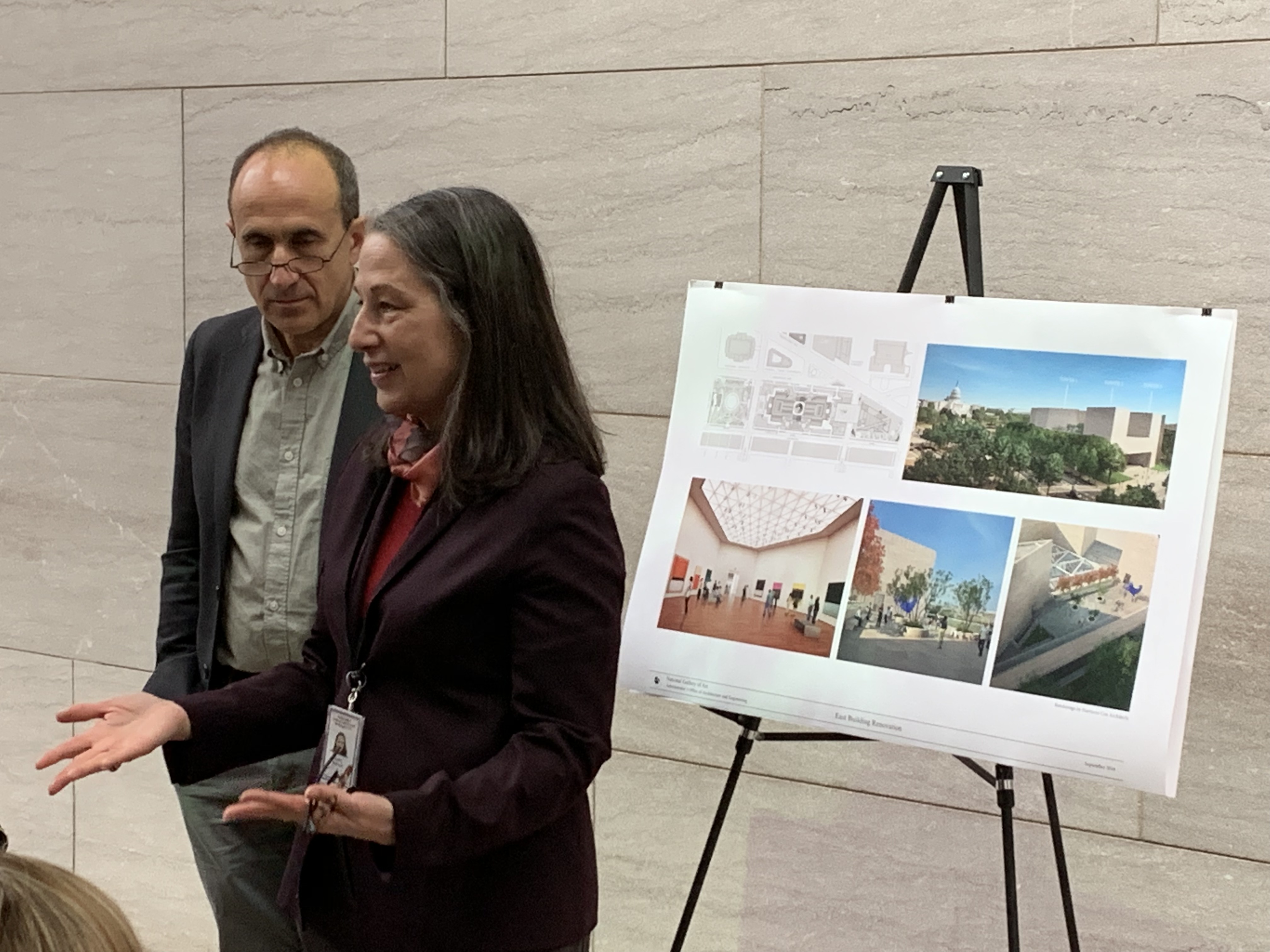
Susan Worth at the National Gallery of Art explaining the building design and the lighting considerations.

My epiphany today was visiting the Newseum and the National Gallery of Art and realizing that many museums have a common issue with objects for storytelling much bigger than I thought. That universal issue is the simple element of light. Light, if appropriately used, can be used to dramatic effect on an object for storytelling or even set a particular mood for an entire gallery. Light serves like a prelude or a foreboding of what you are about to experience with the object(s) in a museum. If used ineffectively light can significantly detract from the story, making it hard for a visitor to view an object from lack of light or it can even be off-putting.

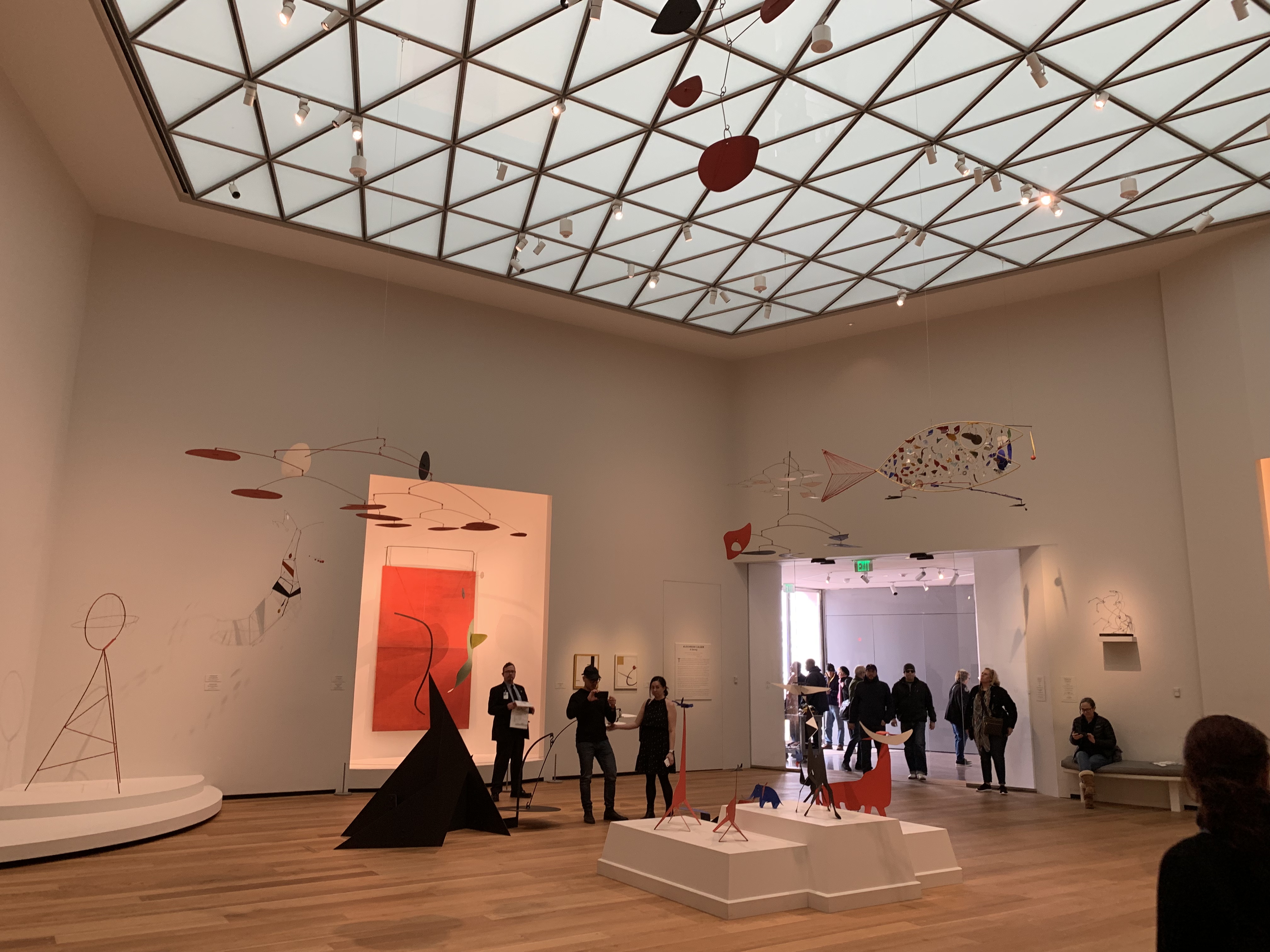
Many of the museums use light for a great dramatic effect to tell stories. One example is at the National Museum of African American Culture and Heritage. The lighting in the lower gallery floors show the objects connected to slavery in dark and barely illuminated cases. That lighting combined with the almost claustrophobic galleries gives the objects a depressing and oppressive mood as you read about their stories. In sharp contrast was the National Gallery of Art that we saw today that uses natural light in strategic ways to fully illuminate the pieces of modern art. The galleries are filled with light and give the room a clean, uniform lit experience that does not detract from the art. This type of lighting is even more critical in a modern art gallery since the experience seems to be mostly visual and not textual.

However, light is not always a friend to museum curators and conservators, and we also heard a lot about that today. An example was at the Newseum and Matt our guide lamented how newspapers do not respond well to direct sunlight. Older newspapers have to be kept in dark rooms in dark trays for visitors, and it almost defeats the purpose of having them on display.  When visiting across the street at the National Gallery of Art, they also have their issues with light. When I asked about how they protect the art from the natural sunlight coming through the glass ceilings, I was very impressed with the answer. Susan Worth, the NGA Chief Architect, explained that there was much debate in the design of the building to best protect the art from the damages of sunlight. They have placed special UV protecting glass in the ceiling and have also installed mechanical shades that can be adjusted. As a result, UV rays are significantly reduced. Although that sounds expensive, I applaud their forethought in the museum design stages to properly illuminate the museum without damaging the objects.

What I learned from this is telling stories through objects in museums is not just about the placement of the objects and the labeling. Even something as simple as light and shadow can affect what stories you are trying to convey to the visitors. If possible, light has to be a key consideration in the early design phases of a museum building so that lighting can be effectively adjusted for what the museum wants to share inside the galleries.

The beautiful combination of natural ceiling light and artificial light at the National Gallery of Art.

OK, What Is It?

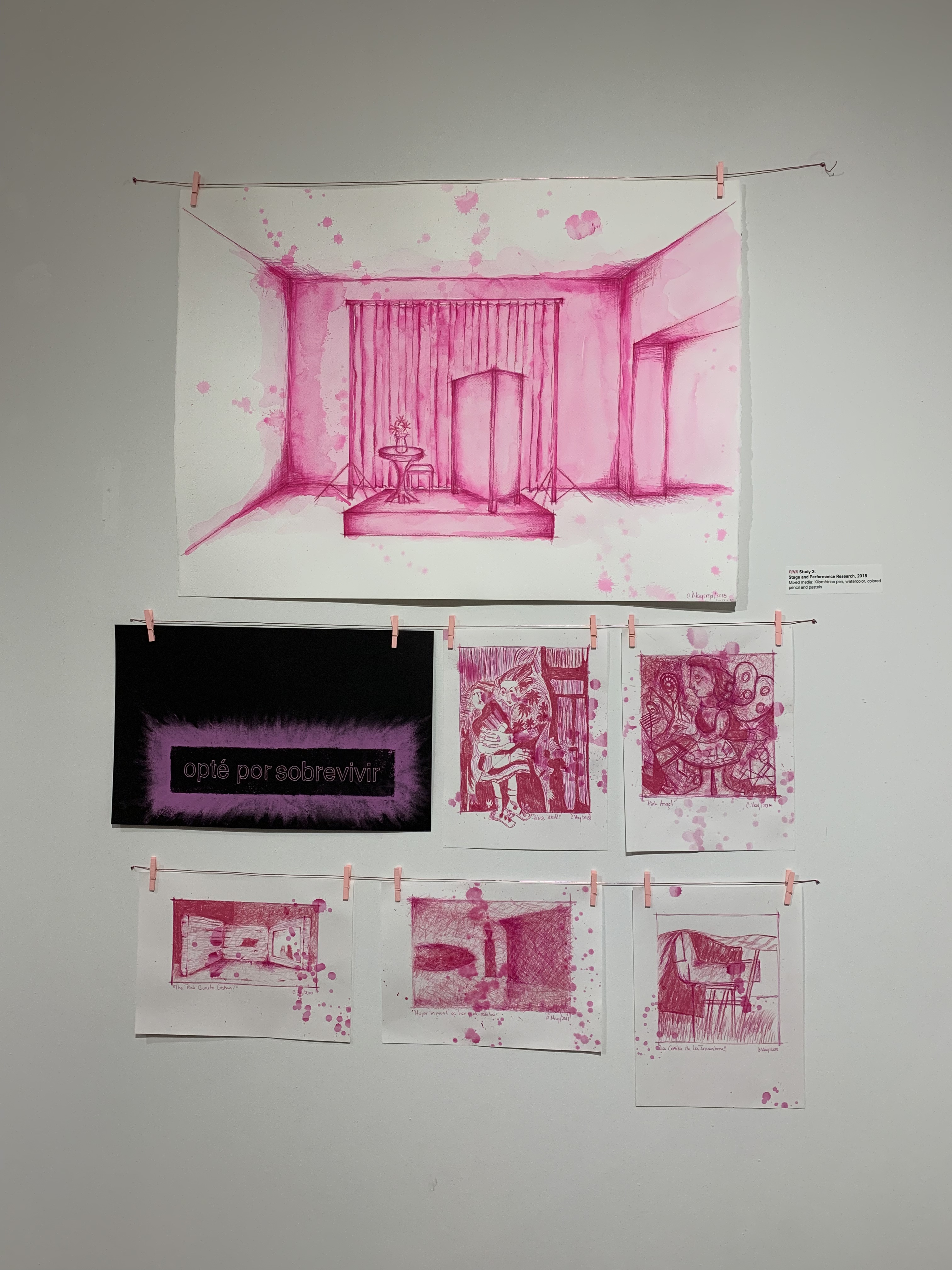
“Pink Study 2, Stage and Performance Research, 2018” at the Art Museum of the Americas

Today was a visit to the Art Museum of the Americas. I was very conflicted after this visit. Anticipation was tempered with disappointment. Mission and vision were tempered with a lack of focus and resources.  Inclusiveness of a broader audience experience was tempered with a lack of clear, understandable pedagogy.

I have to qualify my blog by fully admitting I come from a history museum background and although I worked in an art museum for four and a half years I would not consider myself an art museum connoisseur. There is so much museum debate on what art museums should be (and should not be) but the visit today confirmed some of the issues that bother me. I believe those issues harm art museums quest for broader audiences and greater understanding for those outside the art community.

When I walked into the museum, there was a small lobby. There was one guard at a desk, and he was completely unhelpful. He seemed more concerned about who we were and how many of us there were…more than smiling and welcoming us.  I figured out on my own that the museum was free and went upstairs to see the exhibits.  There were no gallery organizers, no docents, no audio tour option and small, sparse labeling almost hidden on the walls. The first gallery was pink with a piano and two large screens with shoes dancing on the screen. I tried hard to get the concept but I could not. Even the Director, who gave us a tour, later on, said at first he “didn’t get it.” Within ten minutes inside the museum I was put off by the experience except for a part of me that appreciated the art for art’s sake. I had no sense of what the paintings were about. Since I am also outside Latino cultures, it made it even more difficult in places.

There was extensive information about the artists’ biographies but absolutely nothing about the stories behind the art. I discussed this with several of my other students. There was a feeling by some that that is what modern art is about. You are supposed to make up your own mind about what it means to you. To that, I say I indeed will form my own interpretation, but the essence of that art’s deeper social purpose and its understanding could be lost. How do I know this? Because it wasn’t until the Director put a connection of the paintings to the stories behind them and the museum mission that I even understood half of it.

So what if I don’t get it? Modern art needs no explanation, right? If I don’t get it it’s because I lack the training or social values to understand it, right? I thought back to Lauren at the Capitol Visitor’s Center who talked about making everyone feel welcome and connected. I chuckled a bit to myself thinking back to her demonstration of “interpret-torture” when she held out the old juicer and refused to share anything about the object. That is precisely what I thought today’s museum was doing to me. It could have been a much more valuable experience for me.  Art museums have to get past the old avant-garde attitude and be willing to tell stories about the art in some sort of welcoming pedagogy. If they don’t, I firmly believe they will continue to suffer from smaller groups of visitors.

A Capitol Day…Or How I Got My Tour Groove Back

Today hit close to home to the very thing I currently do at my museum, tours and telling stories. I was in the very first docent class to graduate before the National Museum of the Marine Corps opened. I have been giving tours for 12 years to everyone from dignitaries to a family of three. Storytellers must NEVER rest on their laurels. There is always something to polish in your narrative, change in your narrative or work on the non-speaking aspects of storytelling.

Our group was able to listen to some inspiring professional storytellers today at the National Capitol Visitor Center.  I was captivated by our tour guide, Jessica Jackson.  She combined so many of the elements of storytelling that we have talked about so far.   She engaged us, she used humor, she was self-effacing, relatable, passionate, incredibly knowledgeable without being intimidating to the visitors. When she was done I had a smile on my face and I thought…that is the type of guide I want to work with as a colleague. Watch her re-enact a fiery and passionate speech from Frederick Douglass by clicking here. Now that is a tour guide!

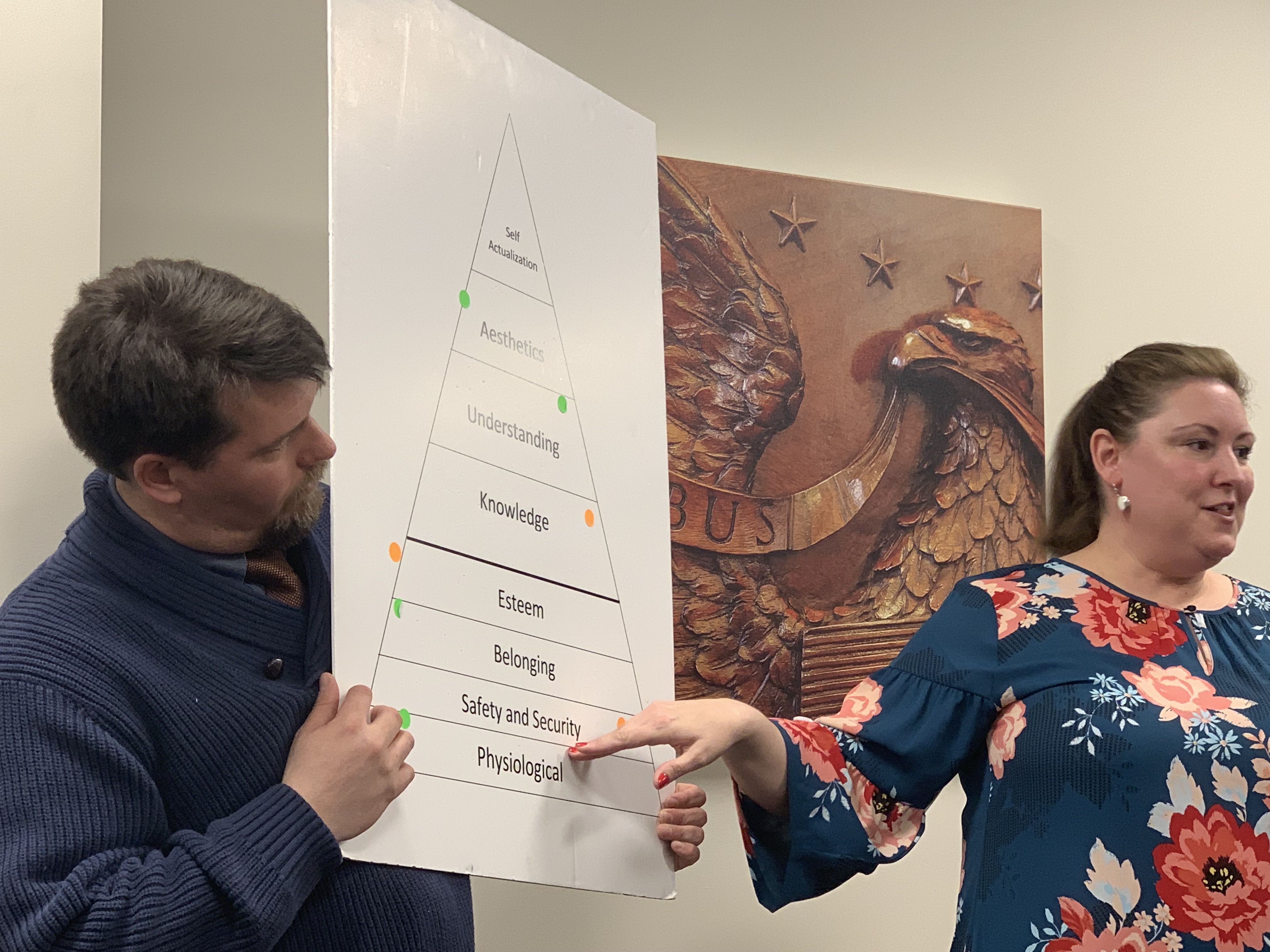
I knew there had to be more to her superb delivery and I was right. Meeting the education department at the visitors’ center was a gold mine of information about how to train people to tell stories effectively while relating to your museum’s mission. Lauren and Eric are educated storytelling pros that have taken a program of antiquated and uninspiring tours at the capitol and made them relatable to a worldwide audience of visitors. That is a monumental task. When I return to my museum I am going to talk with our visitors services department and see if they might invite Eric and Lauren to come down and talk to our docent corps. It would be a huge benefit to us!

I wrote furiously while they spoke about storytelling but these are my golden nuggets I got from them today:

  • The old tour at the capitol was about dates, times and a checklist of places. Avoid that at all costs
  • Always ask “why are we doing this?”
  • No matter the tour…try and at least ask one open-ended question and allow at least one 7 second period of silence in a 30-minute tour
  • Go beyond the tangibles and explore the intangibles to get at the universals (i.e. family, love, loss)
  • INTERPRETORTURE…Don’t be aloof or keep information from your visitors like you have a secret or want to control the sharing of information. (my new favorite tour guide word that I plan on using as a negative example for a long time!)
  • INTERPRETANTAINMENT… Use with caution and temper humor to ensure it remains about the audience and not the tour guide
  • When the tour is done, have you supported your organization fully?
  • Best tool for storytellers is improvisation
  • Be creative. In other words, get out of your comfort zone to give something a try. That is how innovation works.
  • Question why everything and anything is in a tour
Eric and Lauren explaining how to apply the Maslow’s Hierarchy of Needs to tours.

Dissection, Extrapolation and Collaboration…Oh My!

Today was a day of taking objects and their myriad of facades and dissecting them to build different stories. In another interesting talk we heard about the emerging idea of the Smithsonian reaching out to collaborate with other institutions to create a central hub of information for collections. Technology and forward thinking are changing how museums tell stories. However, new technology is not a panacea for persistent museum problems and I personally feel that we are in danger of destroying or distorting stories in terrible ways.

I find it disturbing that in the digital museum age that we are neglecting part of the past.  It’s all about ‘the new software program’ while I see archived media in old technologies sit neglected for lack of resources. I saw it again today. Row upon row of archives lay in quiet rooms while deteriorating, rotting, and waiting to be saved to newer media. The ‘new media’ of ten years ago is now outdated and yet again must be transferred to an even newer media. I fear we are losing the battle. I heard today from Judy Landau, JHU Internship Coordinator, that objects only exist in museums to get at the stories of the people that are behind them. If a film rots, a music record breaks, or a paper archive disintegrates in a curator’s hands…a museum object may lose its context. The storyteller has no research to go to and the story of the object becomes mute. The story behind an object becomes debatable conjecture or at its worst, an unanswered question mark. History museums are full of these objects in their collections. We should not only be collaborating on how to share information about objects but how to save supporting research from dying with much more urgency.

My other concern is our stories are often becoming paraphrased. Our long discussion of this in the morning was fascinating debate. When you dissect an object to get at a story what do you extrapolate from it to put on a label that will be read in 2 to 5 seconds from a visitor? What responsibility does a museum have to take the dissection of that object’s story deeper or keep it whole and complete? These are tough questions but we should always be ready to go beyond the label and tell the story of the object in more meaningful and different ways.

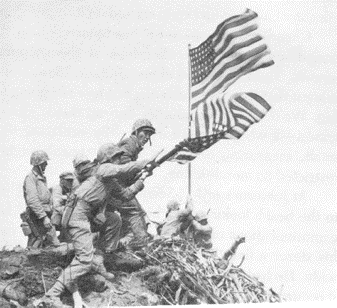
Let me illustrate the power of archives by two pictures below. Both of these pictures came from the docent’s WWII gallery guide at the National Museum of the Marine Corps. The first picture below I guarantee you have seen. It is the iconic picture of six Marines raising an American flag in WWII on the island of Iwo Jima. The flag (object) hangs in the National Museum of the Marine Corps. However, did you know that just out of frame on the right side of the famous picture is another flag being lowered? That is where the second picture below comes in.  What many people don’t know about this story is there was a flag raised before the famous picture. The second picture below proves the first flag was lowered at the same time the more famous second flag was raised. I can never look at that famous photo or the famous (second) flag without thinking about what is just out of frame. What if we didn’t preserve the negative of that second picture? Proof would instantly become conjecture. One archived image can change the entire story of the object. That is the power of preserving archives.

The second Iwo Jima Flag Raising taken by AP photographer Joe Rosenthal.

The first flag being lowered as the second flag is raised in the background. Photo taken by PFC Bob Campbell.

The First Drink

Quote from Ida B. Wells from the National Museum of African American Museum of Heritage and Culture

Today we met Veronica Donahue, Associate Dean of Advanced Academic Programs at JHU, and she gave us some advice about our seminar.  She said “drink deeply of this city.” Today was our first drink and for me it was a drink taken in with deep emotions and reflections.  We all have our personal stories woven into the fabric of the places we come from, the values we strive for, and the essence of our souls.  I heard stories from my classmates that moved me and I know I am in good company with people willing to share deeply of themselves.

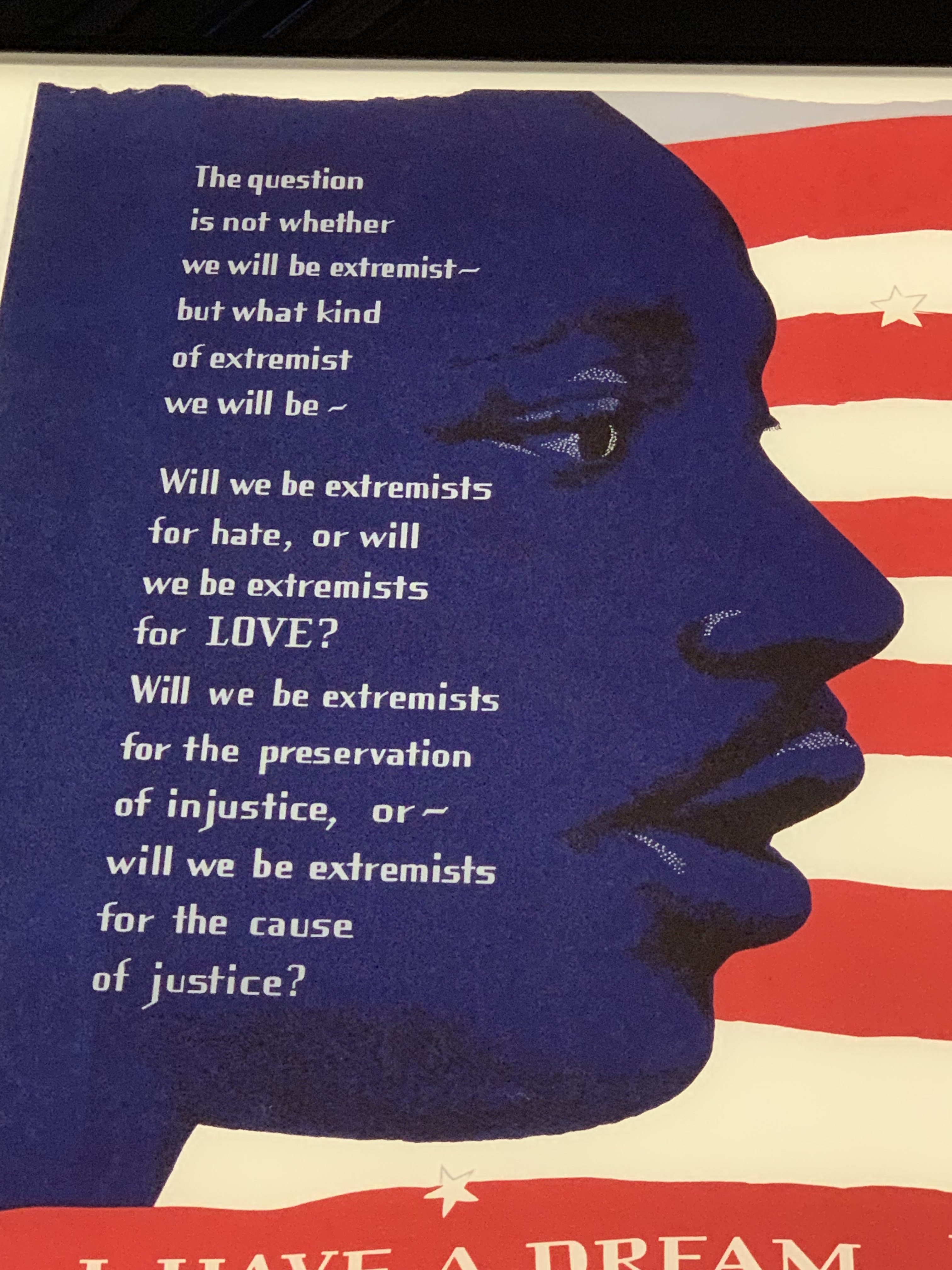
Today also reaffirmed that we humans are so terribly flawed. However, we have an equal capacity to rise up and overcome to right our wrongs or meet our challenges. The epiphany today is this city represents our worst and our best stories we have to offer as Americans. Our failings are displayed for others as an omission of our grave sins and a warning for others…but it is more than that. So many stories have an element of hope no matter how grievous the circumstances.  Love and justice always try and find a way and that is not unique to America.

Museum professionals are the seekers and caretakers of those stories. Our job as museum storytellers is to seek out the truths. Notice I did not say truth. The more perspectives we present in our storytelling the more it signals inclusiveness and avoids the danger of the single story that Chimamanda Ngozi warned about in our course assignment. I have already learned that all museums struggle with this simple but sometimes allusive concept. It may not be fully achievable due to resources or size of a museum but it should always be a goal. I feel fortunate that I live in a place where different perspectives are welcome in our profession. There are certainly examples of places and times that this was not the case for museums.

We have only taken our first drink in this city full of stories but we will never be able to drink all of it. The stories are too vast and rich. I felt that as we hunted for our objects in the National Museum of African American Heritage and Culture. We were forced to bypass amazing stories in the interest of time and at the cost of our inherent curiosity. I suppose the reality is a great museum is never done because there is always another amazing story waiting to be told.

Tomorrow is another drink from an endless glass and I intend to make it another memorable one.

Quote from Dr. Martin Luther King Jr. in the National Museum of African American Heritage and Culture

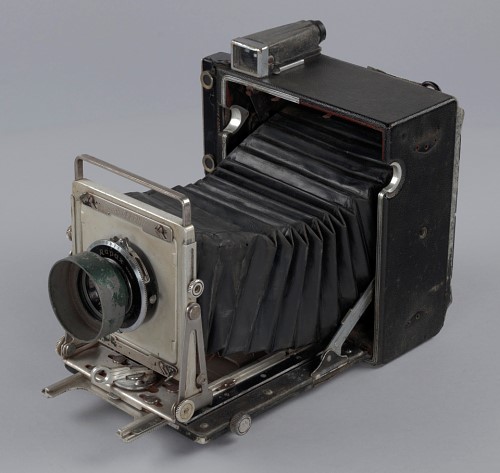
Selected object from NMAAHC- Camera belonging to Mr. Charles “Teenie” Harris

Camera belonging to Mr. Teenie Harris from the NMAAHC collection.

Several factors drew me to this artifact at the National Museum of African American History and Culture (NMAAHC).  First, I believe that the camera is a powerful instrument to record historic moments.  Cameras can present the event in an unvarnished way and they can capture so many important historic details in only one image. A picture really is worth a thousand words. Cameras capture our faults and our triumphs as humans and greatly help illuminate the stories museums try to convey.  Photos can create emotion and empathy without saying one word. Many times they require no language interpretation.

I also was attracted to this object because I believe photographers can see the world the way that many of us rarely do. They can sense when something is occurring at its zenith to click the lens.  Such is the case with this camera.  It belonged to Mr. Charles “Teenie” Harris who was a photographer for the Pittsburgh Courier, one of the oldest African American newspapers in America. 

I did a bit of online research about Mr. Harris and he was remarkable! The Carnegie Museum of Art has a large portion of his massive 80,000 images he took of events in the black neighborhoods of Pittsburgh during the 1930s all the way up into the 1970s.  If you would like to watch a twenty-one minute story of Mr. Harris put together by the Carnegie Museum of Art, click here

Mr. Harris was nicknamed “One Shot” because he often just captured one image and then he would leave the event! Astounding when you see the emotion and importance of the kind of images he captured in everyday life in the communities and the array of celebrities that visited.  I’m curious to know when he used this camera in his career. Was it his favorite camera? Was the camera special to him for some professional or sentimental reason? What was socially occurring when he was using this camera? Did the camera witness something particularly tragic or uplifting?

This camera is on display at the NMAAHC. It is located on the third floor in the Making a Way Out of No Way exhibition and is object 2014.302.2.