
My epiphany today was visiting the Newseum and the National Gallery of Art and realizing that many museums have a common issue with objects for storytelling much bigger than I thought. That universal issue is the simple element of light. Light, if appropriately used, can be used to dramatic effect on an object for storytelling or even set a particular mood for an entire gallery. Light serves like a prelude or a foreboding of what you are about to experience with the object(s) in a museum. If used ineffectively light can significantly detract from the story, making it hard for a visitor to view an object from lack of light or it can even be off-putting.
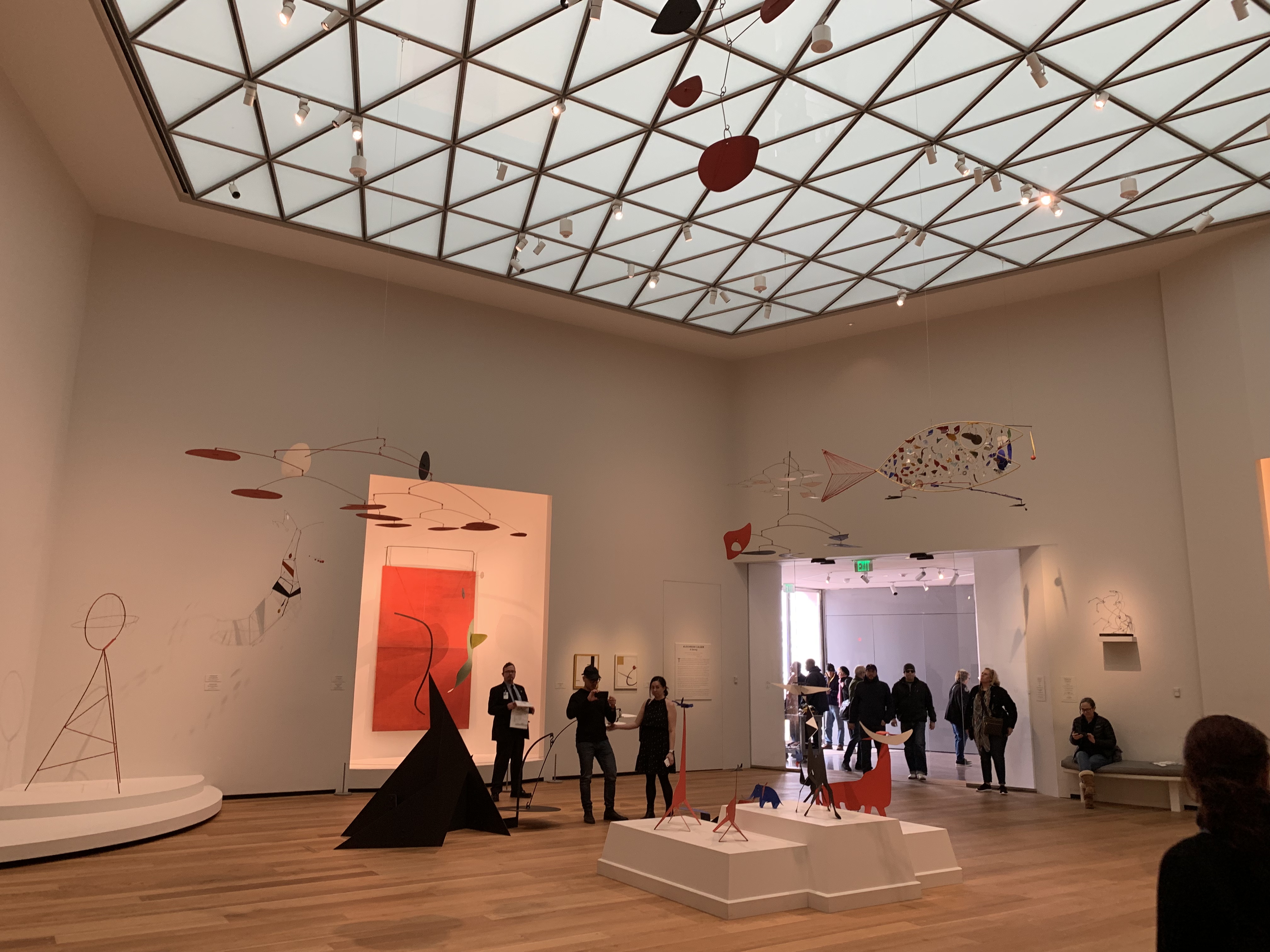
Many of the museums use light for a great dramatic effect to tell stories. One example is at the National Museum of African American Culture and Heritage. The lighting in the lower gallery floors show the objects connected to slavery in dark and barely illuminated cases. That lighting combined with the almost claustrophobic galleries gives the objects a depressing and oppressive mood as you read about their stories. In sharp contrast was the National Gallery of Art that we saw today that uses natural light in strategic ways to fully illuminate the pieces of modern art. The galleries are filled with light and give the room a clean, uniform lit experience that does not detract from the art. This type of lighting is even more critical in a modern art gallery since the experience seems to be mostly visual and not textual.
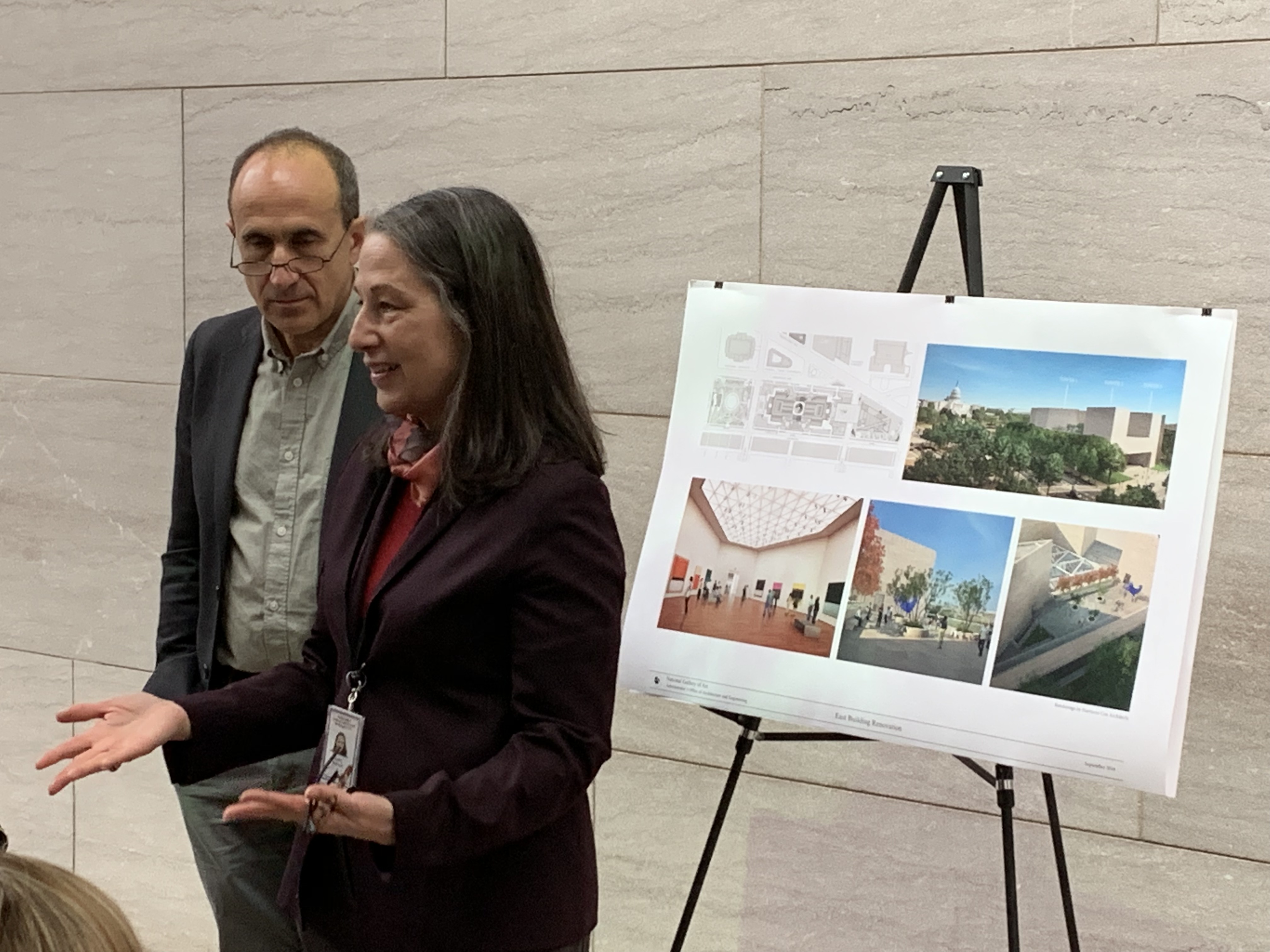
However, light is not always a friend to museum curators and conservators, and we also heard a lot about that today. An example was at the Newseum and Matt our guide lamented how newspapers do not respond well to direct sunlight. Older newspapers have to be kept in dark rooms in dark trays for visitors, and it almost defeats the purpose of having them on display. When visiting across the street at the National Gallery of Art, they also have their issues with light. When I asked about how they protect the art from the natural sunlight coming through the glass ceilings, I was very impressed with the answer. Susan Worth, the NGA Chief Architect, explained that there was much debate in the design of the building to best protect the art from the damages of sunlight. They have placed special UV protecting glass in the ceiling and have also installed mechanical shades that can be adjusted. As a result, UV rays are significantly reduced. Although that sounds expensive, I applaud their forethought in the museum design stages to properly illuminate the museum without damaging the objects.
What I learned from this is telling stories through objects in museums is not just about the placement of the objects and the labeling. Even something as simple as light and shadow can affect what stories you are trying to convey to the visitors. If possible, light has to be a key consideration in the early design phases of a museum building so that lighting can be effectively adjusted for what the museum wants to share inside the galleries.
 Dave's Museum Journeys
Those NGA galleries are such perfect examples of how light can change how visitors experience art. The difference between those soaring tower spaces in a purpose-built, revised and refined space, and galleries in retrofitted, domestically-scaled spaces such as those at the Art Museum of the Americas was profound. Imagine if the contents of those galleries were switched, and we had seen the Calder mobiles at the AMA and the Carolina Mayorga works at the NGA! How would that have changed the impact of the objects?
LikeLike
Stephanie, It certainly might have changed each exhibit. In addition to light is the element of space to tell the stories. Calder’s huge mobiles wouldn’t even fit in AMA galleries but I do believe it might have made some of his smaller pieces come closer and be more intimate with the viewer.
Looking at the Mayorga works I think she would have still been very minimalist if she was exhibiting at the NGA. However, she might have made her housing slum exhibit much larger to emphasize the sprawling slums. In regards to light, Mayorga would have had a much more difficult time making the spaces of the NGA bathed in pink with all the natural night from above. I suppose the lesson is that you need to look at all the exhibit design elements you have available to craft your story.
LikeLike